
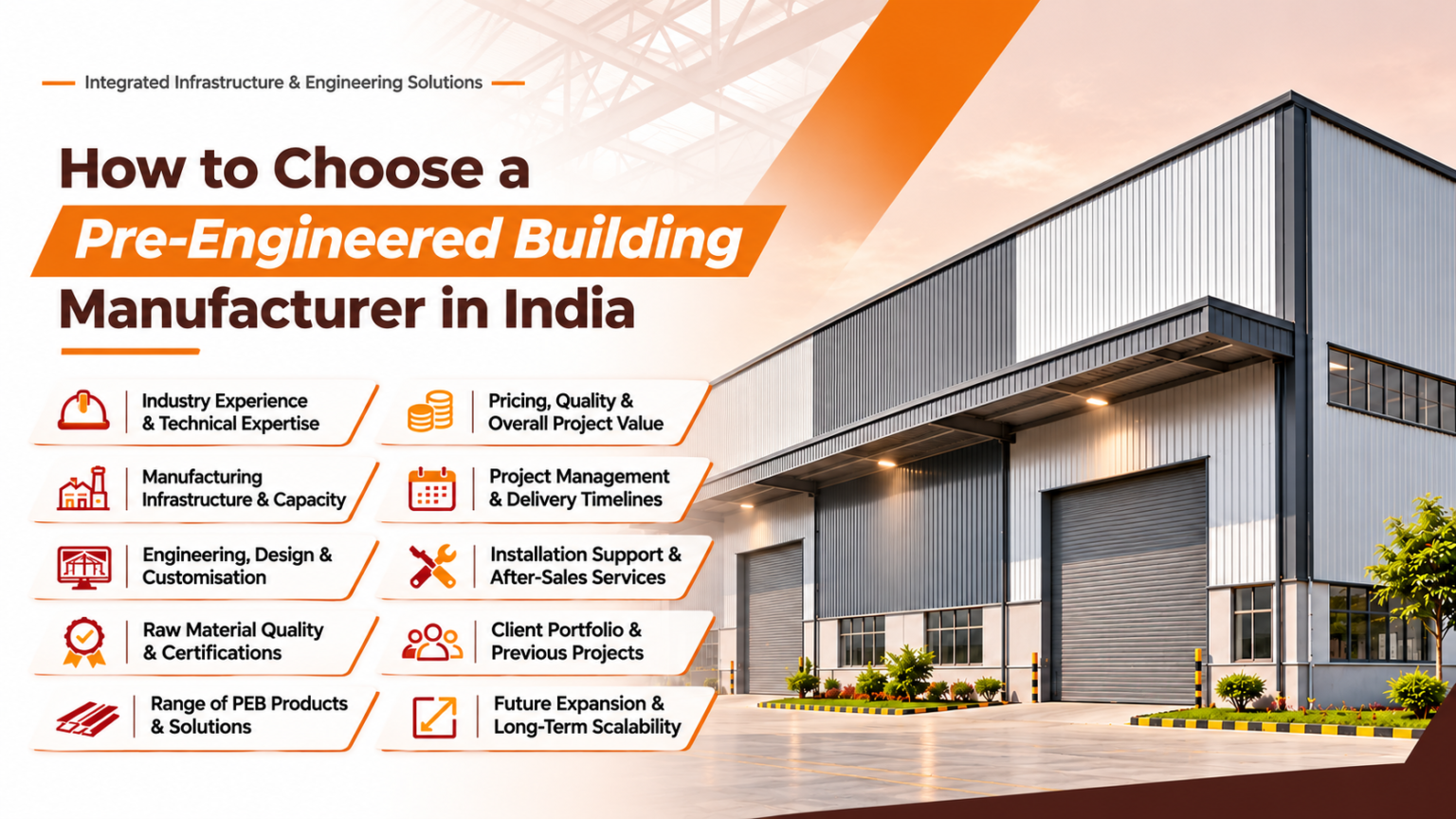
The construction industry in India is rapidly evolving, with businesses increasingly adopting modern construction technologies to reduce project timelines, improve structural efficiency, and control construction costs. One such technology gaining significant popularity is the Pre-Engineered Building (PEB) system.
From industrial warehouses and manufacturing plants to commercial complexes, logistics parks, and large-scale infrastructure projects, PEB structures offer a practical alternative to conventional construction methods. However, the success of any PEB project largely depends on choosing the right manufacturer.
With numerous PEB companies operating across India, selecting a reliable manufacturing partner can be challenging. A manufacturer must offer more than competitive pricing. Engineering expertise, manufacturing capabilities, material quality, project management, and timely delivery are equally important.
In this guide, we will explore the key factors to consider when choosing a Pre-Engineered Building manufacturer in India.
1. Evaluate Industry Experience and Technical Expertise
Experience is one of the first factors to consider when selecting a PEB manufacturer. An experienced company understands the technical challenges involved in designing and constructing different types of steel structures.
Before finalising a manufacturer, evaluate its experience in handling projects such as:
• Industrial manufacturing plants
• Warehouses and logistics facilities
• Commercial and multi-storey buildings
• Cold storage facilities
• Textile and engineering units
• Power plants and infrastructure projects
• Large-span industrial structures
Ask for previous project references, completed project photographs, and details about the company’s engineering capabilities. A manufacturer with experience across different industries is more likely to understand project-specific requirements and recommend suitable structural solutions.
2. Check Manufacturing Infrastructure and Production Capacity
A manufacturer’s production infrastructure directly influences its ability to execute projects efficiently. A well-equipped manufacturing facility should have modern machinery, organised production processes, and adequate space for handling structural steel components.
Important manufacturing capabilities to evaluate include:
• CNC cutting and drilling machines
• Automatic welding systems
• Plate processing and fabrication equipment
• Purlin roll-forming machines
• Roofing and cladding sheet manufacturing facilities
• Quality inspection and testing equipment
• Material storage and dispatch facilities
You should also understand the company’s annual production capacity and whether it can accommodate your project requirements within the proposed timeline. For example, a manufacturer with a 2,57,000 sq. ft. manufacturing facility and an annual production capacity of approximately 5,000–6,000 metric tonnes can demonstrate substantial manufacturing infrastructure. However, always verify actual production capacity, current utilisation, and project commitments before making a decision.
3. Assess Engineering, Design and Customisation Capabilities
Engineering is the foundation of every successful Pre-Engineered Building project. A professional PEB manufacturer should have an experienced engineering team capable of understanding architectural drawings, analysing structural requirements, and developing customised building designs.
Check whether the manufacturer provides:
• Structural design and engineering
• 3D modelling and detailing
• Load calculations and structural analysis
• Wind and seismic load considerations
• Foundation and connection details
• Shop drawings and fabrication drawings
• Customised building configurations
The design should comply with applicable Indian Standards and relevant project specifications. Important considerations include wind loads, seismic conditions, roof loads, operational requirements, building dimensions, and future expansion possibilities. A technically competent manufacturer will focus on structural safety, material optimisation, and long-term performance rather than simply reducing steel consumption.
4. Verify Raw Material Quality and Certifications
The quality of raw materials directly affects the strength, durability, and service life of a steel building. Before selecting a manufacturer, ask about the source and grade of structural steel, roofing sheets, fasteners, coatings, and other components.
Important quality parameters include:
• Structural steel grade and material test certificates
• Steel thickness and dimensional accuracy
• Galvanisation and protective coatings
• Corrosion resistance
• Welding quality
• Roofing and cladding specifications
• Bolt and fastener quality
Also check whether the manufacturer follows documented quality management processes and holds relevant certifications. Industry approvals, vendor registrations, and successful project execution for established organisations can provide additional confidence. For industrial and infrastructure projects, verify whether the manufacturer has experience meeting the technical and quality requirements of organisations such as Tata Steel, IOCL, EIL, or BHEL, wherever relevant to your project.
5. Understand the Range of PEB Products and Solutions
A reliable PEB manufacturer should offer a comprehensive range of building components and solutions. This allows businesses to work with a single manufacturing partner instead of coordinating with multiple suppliers.
Structural components include primary and secondary steel structures, built-up beams and columns, roof trusses, structural frames, steel girders, and heavy steel structures.
Roofing and cladding solutions may include Hi-Rib roofing sheets, Cliplock roofing systems, wall cladding sheets, metal ceiling panels, and insulated roofing solutions.
Secondary structural components include C and Z purlins, girts, bracing systems, and structural accessories. Manufacturers offering integrated solutions can help improve coordination between design, fabrication, supply, and installation.
6. Compare Pricing, Quality and Overall Project Value
Price is an important consideration, but selecting a manufacturer based only on the lowest quotation can lead to problems later. Two manufacturers may offer significantly different quotations for what appears to be the same building. These differences can arise from variations in steel grades, material thickness, structural design, coatings, roofing specifications, and project scope.
Before comparing quotations, ensure that both manufacturers are offering the same specifications. Check:
• Total steel quantity and specifications
• Structural design and engineering charges
• Roofing and cladding materials
• Painting and protective coating systems
• Transportation and logistics costs
• Erection and installation charges
• Foundation and civil work responsibilities
• Taxes and additional charges
Request a detailed bill of quantities (BOQ) and technical specification sheet. The right manufacturer should provide an appropriate balance between cost efficiency, structural safety, product quality, and long-term operational value.
7. Evaluate Project Management and Delivery Timelines
Timely project execution is essential, particularly for manufacturing plants, warehouses, and industrial facilities where construction delays can affect business operations.
A professional PEB manufacturer should have a clearly defined project execution process covering:
1. Initial consultation and requirement analysis.
2. Architectural and structural design.
3. Engineering approval and drawing finalisation.
4. Raw material procurement.
5. Manufacturing and fabrication.
6. Quality inspection.
7. Transportation and dispatch.
8. On-site erection and installation, if included in the contract.
Ask the manufacturer to provide a realistic project schedule with clear milestones. You should also understand how the company manages unexpected delays, material availability, design changes, and site coordination. Effective communication between the manufacturer, contractor, consultant, and client is essential for smooth project execution.
8. Check Installation Support and After-Sales Services
Manufacturing quality alone does not guarantee a successful PEB project. Proper installation and technical support are equally important. An experienced manufacturer should provide appropriate technical assistance during erection and installation.
Before finalising your decision, clarify whether installation services are included, whether experienced erection teams are available, whether site supervision is provided, what warranty terms are offered, whether maintenance guidance is available, and how technical complaints and service requests are handled.
A manufacturer that remains involved after material dispatch can provide better project coordination and long-term support.
9. Review Client Portfolio and Previous Projects
A company’s project portfolio provides valuable insights into its actual capabilities. Do not rely only on brochures or website claims. Request references for completed projects that are similar in size, complexity, and application to your requirements.
Look for experience in large industrial facilities, high-clearance warehouses, heavy engineering structures, manufacturing plants, and infrastructure and commercial buildings.
If possible, visit a completed project or the manufacturer’s manufacturing facility. Speaking with previous clients can help you understand the company’s product quality, communication, delivery performance, and project management standards.
10. Consider Future Expansion and Long-Term Scalability
Business requirements change over time. A warehouse may require additional storage space, while a manufacturing facility may need new production lines or expanded operational areas.
Therefore, your PEB manufacturer should consider future expansion during the initial design stage. Discuss whether the building can accommodate additional bays, increased storage capacity, new equipment, or structural modifications.
A scalable design can help reduce future expansion costs and minimise operational disruptions.
Conclusion: Choose a PEB Manufacturer That Delivers Long-Term Value
Selecting the right Pre-Engineered Building manufacturer in India is an important investment decision. The ideal manufacturing partner should combine engineering expertise, advanced manufacturing infrastructure, quality materials, customised solutions, and reliable project execution.
Instead of focusing only on the initial quotation, evaluate the manufacturer’s complete capabilities, previous projects, technical team, production capacity, and after-sales support.
A well-designed and professionally manufactured PEB structure can deliver long-term benefits through faster construction, efficient space utilisation, structural reliability, and operational flexibility.
Looking for a Reliable PEB Manufacturing Partner in India?
ETS – Eco Turnkey Solutions offers integrated solutions across Pre-Engineered Buildings (PEB), structural steel, heavy and light fabrication, roofing and cladding, and turnkey infrastructure projects.
With a manufacturing facility spanning approximately 2,57,000 sq. ft. and an annual production capacity of around 5,000–6,000 metric tonnes, ETS focuses on delivering engineered steel building solutions for industrial and infrastructure requirements.
Connect with ETS to discuss your project requirements and explore customised PEB solutions for your next industrial or commercial development.